Without the framework
Pick a model that felt good, prompt until the output looked right, report almost none of it.
Beyond the Hype: Using Generative AI in Public Administration Research
A framework for the systematic and responsible use of Large Language Models
Dr. Michael Overton
Associate Professor of Public Administration
Associate Director, Institute for Interdisciplinary Data Science
University of Idaho

Scholars have limited guidance on how to use it rigorously.
You might be saying to yourself,
“That number seems ridiculously high.
I can always spot AI, and I don’t see it THAT often!”
You might be saying to yourself,
“That number seems ridiculously high.
I can always spot AI, and I don’t see it THAT often!”
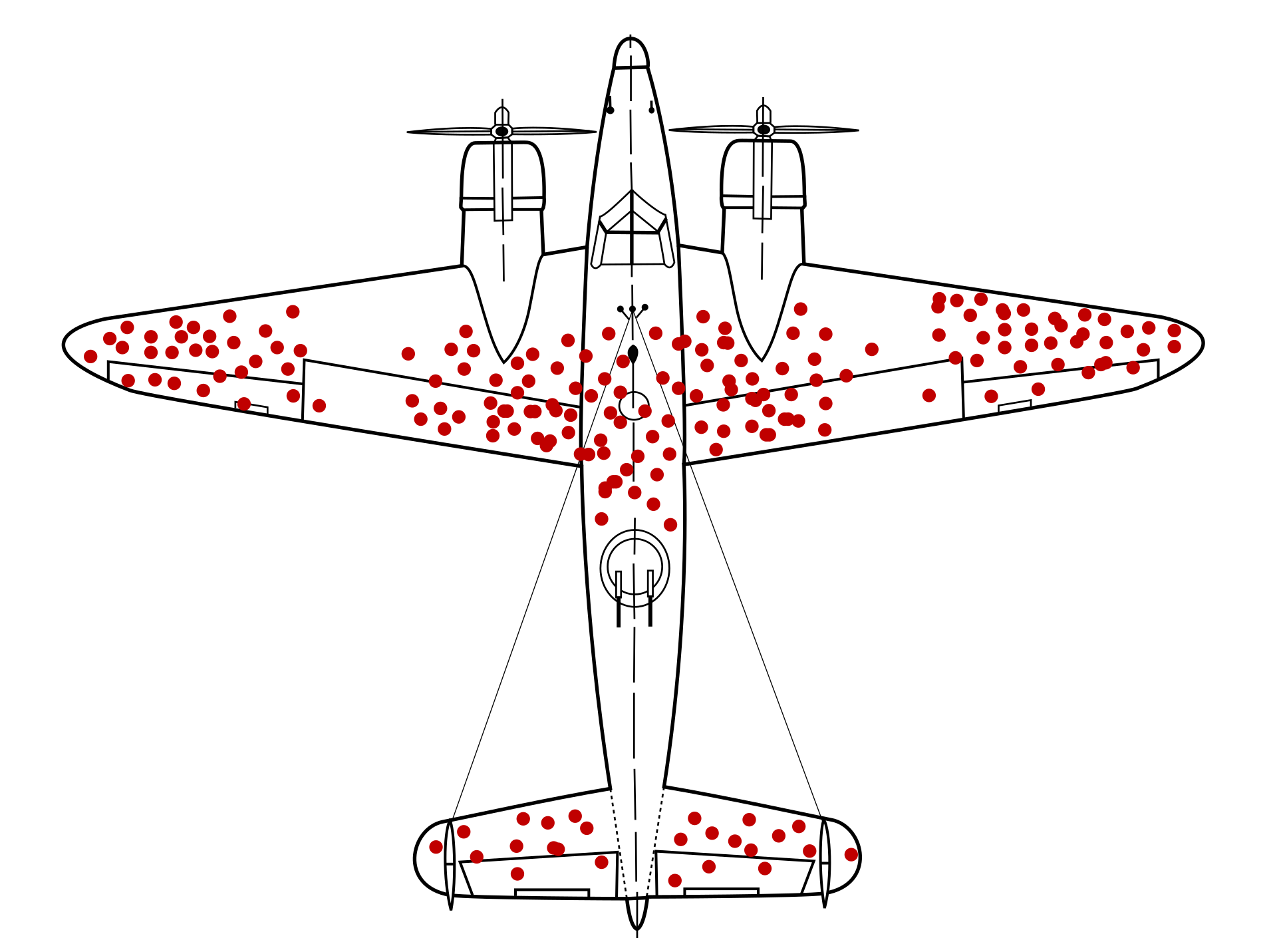
Pick a model that felt good, prompt until the output looked right, report almost none of it.
Choose the task, agents, model, and prompt deliberately, evaluate purposefully, and report all transparently.
TaMPER
TaMPER
Task
agents
Model
Prompt
Evaluation
Reporting
Six decision points for using generative AI with rigor.
T · Decision one
What are you asking the LLM to do?
A task is the set of actions that transform input data into the desired output. Defining one means making three decisions.
| LLM as a human | Predefined example | Undefined example | Type of task |
|---|---|---|---|
| Participant | Survey respondent | Open-ended interviewee | Synthetic Data Generation |
| Coder | Annotate text | Category creation | Text Analysis |
| Human extractor | Identify and extract text | Summarize document | Text Analysis |
Click a use case to see the task, a sample input, and the output.
Input
LLM
prompt · model · iteration
Output
a · the silent letter
There is a silent a in TaMPER. Today it stands for Agents.
Agent = Model + Harness
Harness. The software wrapped around the model that supplies its context, runs the tools it asks for, remembers across turns, and loops until the task is done.
Anthropic calls the base unit the “augmented LLM,” a model plus retrieval, tools, and memory. (Anthropic 2024)
Pick a wiring shape, then click a tool to give the model a way to act. Every node is an LLM.
An agent is one or more LLM calls, linked together and given tools.
What happens
A fixed pattern of LLM calls. You design the path in code, and every run follows the same steps.
The model decides the path at runtime. It picks the next step, calls tools, loops, and stops when it judges the task done.
How complicated the task is. Many steps and deviations from routine, but with clear rules and a checkable answer.
How analyzable the task is. The right answer requires judgment, context, or values, and cannot be cheaply verified.
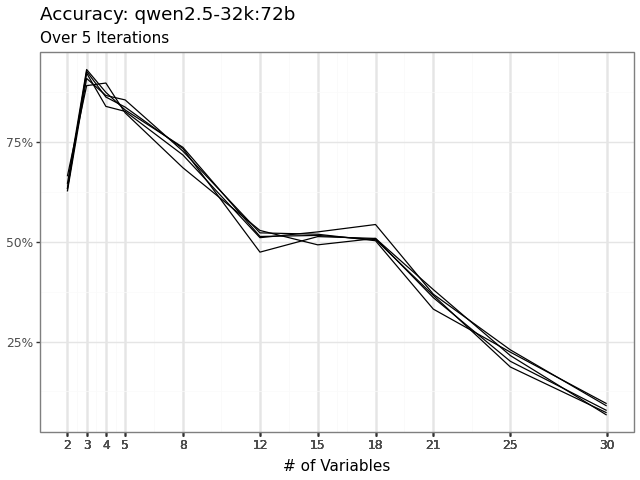
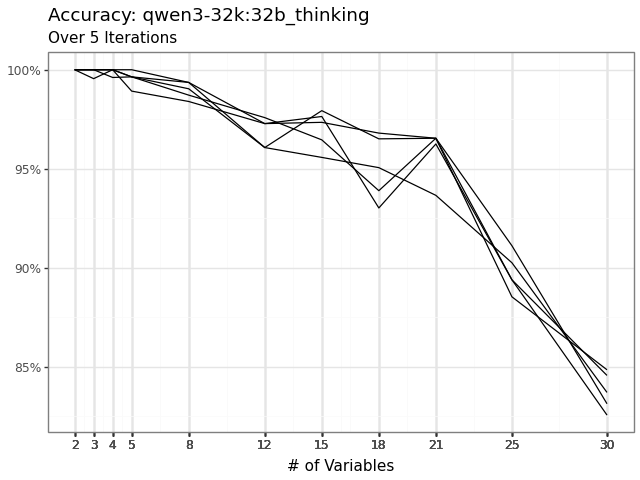
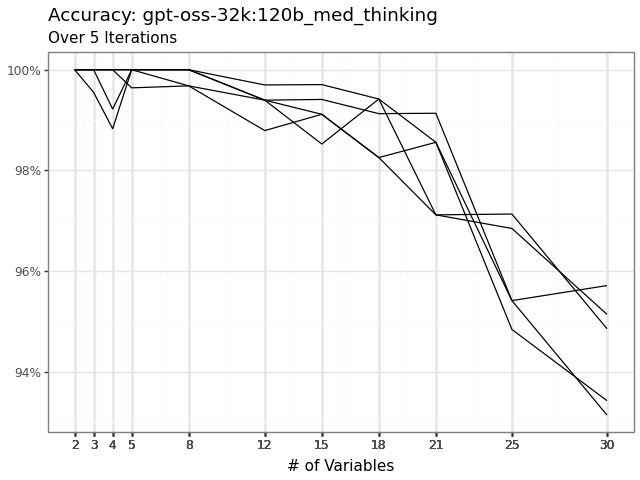
M · Decision two
Which LLM should you actually use?
Click a decision. The two boxes define each option; the recommendation follows below.
Recommendation
P · Decision three
How do you tell the model what you want?
TASK OVERVIEW: Determine whether the news article suggests that {FIRM} engaged in organizational misconduct.NEWS ARTICLE: {NEWS_ARTICLE}

DEFINITIONS:
Organizational Misconduct: "an illegal, unethical, or socially irresponsible behavior performed by an organization that directly harms its stakeholders through fraud, product safety issues, employee mistreatment, and environmental violations."QUESTION: Did {FIRM} engage in organizational misconduct in the news article? Briefly explain your decision. Respond using only one of the following options:
a) yes
b) noINSTRUCTIONS: Before responding, carefully review the TASK OVERVIEW, NEWS ARTICLE, DEFINITIONS, QUESTION, INSTRUCTIONS, and OUTPUT FORMAT. Respond in valid JSON using the key-value pair {"misconduct": <"yes"|"no">, "rationale": "<one or two sentences>"}. Before finalizing, review the DEFINITIONS so the rationale does not deviate from them, and review the NEWS ARTICLE so your decision and rationale do not deviate from it.OUTPUT FORMAT:
{"misconduct": <"yes"|"no">, "rationale": "<one or two sentences>"}Click a component to highlight it in the prompt and see its recommendation.
TASK OVERVIEW: Determine whether the news article suggests that {FIRM} engaged in organizational misconduct.NEWS ARTICLE: {NEWS_ARTICLE}

DEFINITIONS:
Organizational Misconduct: "an illegal, unethical, or socially irresponsible behavior performed by an organization that directly harms its stakeholders through fraud, product safety issues, employee mistreatment, and environmental violations."QUESTION: Did {FIRM} engage in organizational misconduct in the news article? Briefly explain your decision. Respond using only one of the following options:
a) yes
b) noINSTRUCTIONS: Before responding, carefully review the TASK OVERVIEW, NEWS ARTICLE, DEFINITIONS, QUESTION, INSTRUCTIONS, and OUTPUT FORMAT. Respond in valid JSON using the key-value pair {"misconduct": <"yes"|"no">, "rationale": "<one or two sentences>"}. Before finalizing, review the DEFINITIONS so the rationale does not deviate from them, and review the NEWS ARTICLE so your decision and rationale do not deviate from it.OUTPUT FORMAT:
{"misconduct": <"yes"|"no">, "rationale": "<one or two sentences>"}
Recommendation
Click a node in the flowchart to highlight the matching step.
Did the firm do anything wrong in this news article?
Northwind delayed telling employees about layoffs so it would not owe the retention bonuses promised to those who stayed.
“Northwind appears to have engaged in a practice that could be considered ethically questionable…”
About 300 words, and it never commits to a yes or no.
That baseline is fixed. Click a refinement to see the new prompt, the new output, and what improved.
What improved over the original output
Model qwen2.5:72b via MindRouter.
Structured output forces the model to return a fixed, machine-readable shape, a JSON schema you define, instead of free prose. The model fills the slots you specify and cannot wander outside them.
{
  "organizational_misconduct": "yes | no",
  "explanation": "string"
}
{
  "organizational_misconduct": "yes",
  "explanation": "The report details
                 concealed safety violations."
}
Why it matters. Compliance jumps to about 100 percent, every answer parses the same way, and you can separate what the schema imposed from what the model actually decided.
E · Decision four
How do you know the output is any good?
Classical measurement assumes a true score. Metrology asks how wide the plausible range is when no true score exists.
Is this measurement right or wrong relative to a known true value?
How much confidence can we place in this measurement?
Treat the LLM as a measurement instrument.
Protocol: the framework, the decisions a researcher makes, and the workflow for assessing them.
Prompts · Models · Dual Response Format
Criteria and Metrics: the specific things we measure, and the numbers we use to measure them.
Compliance · Accuracy · Precision · Quality
Five components for documenting and evaluating any LLM-assisted analysis (Overton et al. 2025).
Task
What you want the LLM to do.
Model
Which LLM, configured how.
Prompt
How you instruct it.
Evaluation
How you validate the outputs.
Reporting
How you document everything.
Decision points · what the researcher chooses
Task
What is being measured?
Model
Which instrument?
Prompt
How is the instrument configured?
Actions on those decisions
Evaluation
Validate the chosen task, model, and prompt against compliance, accuracy, and precision.
Reporting
Document each decision and its validation in a way a reviewer can audit.
Prompt
Is this tweet toxic? Return a label and a brief explanation.
Tweet
@hammyp703 @Reuters Fake news try again loser
Example: True
Evaluate with: compliance, accuracy, precision.
Example: "The comment directly insults the addressed users, which is rude and disrespectful..."
Evaluate with: compliance, quality.
Accuracy · Precision
Did the LLM read the data correctly, and how much of what we observe is real signal versus run-to-run noise?
Compliance · Quality
Is the measurement instrument actually working and producing parseable output and reasoning coherently about the inputs it sees?
At a minimum, scholars should evaluate LLMs based on Compliance, Accuracy, and Precision criteria.
A single case carried through every criterion: stance detection on the Amazon HQ relocation debate.
Stance detection on 944 tweets regarding the Amazon HQ relocation.
Two prompts compared:
{
  "stance": "Supportive | Neutral |
             Unsupportive | Not about Amazon",
  "confidence": 0.0,
  "explanation": "string"
}
Schema match. Are the fields, types, and labels the ones that were requested?
HQ2 case · Compliance (stance detection)
| Model | Established prompt | Revised prompt |
|---|---|---|
| Command A | 99.98% | 100.00% |
| GPT OSS | 100.00% | 100.00% |
| Phi 4 | 100.00% | 100.00% |
| Qwen 3 | 100.00% | 100.00% |
Structured outputs delivered about 100 percent compliance in every cell, so the floor is cleared and we move on.
Closeness to a reference, whether objective ground truth or expert human judgment. This is validity in classical terms.
HQ2 case · Accuracy with McNemar (stance detection)
| Model | Established | Revised | McNemar χ² |
|---|---|---|---|
| Command A | 55.19% | 72.78% | 272.0*** |
| GPT OSS | 70.61% | 70.04% | 153.0 |
| Phi 4 | 45.59% | 47.58% | 379.0*** |
| Qwen 3 | 68.58% | 70.02% | 280.0** |
The GPT OSS gap is noise, so the framework sends you to the next criterion. * p<.05 · ** p<.01 · *** p<.001
Output consistency when the same input is run five or more times. This is reliability, not the classification precision above.
HQ2 case · Precision (stance detection, 5 iterations)
| Model | Krippendorff's α | Agreement rate | ||
|---|---|---|---|---|
| Established | Revised | Established | Revised | |
| Command A | 0.71 | 0.95 | 86.97% | 98.01% |
| GPT OSS | 0.89 | 0.90 | 96.06% | 96.44% |
| Phi 4 | 0.72 | 0.81 | 88.03% | 91.89% |
| Qwen 3 | 0.74 | 0.83 | 89.77% | 93.52% |
Precision broke the tie for Command A. Same accuracy region, far tighter agreement, alpha 0.71 up to 0.95.
Compliance, accuracy, and precision are the floor. Quality is the second-order criterion, and it only means something once the floor is cleared.
Fluency and coherence.
Entailment and plausibility.
Factuality, faithfulness, relevance.
Information depth and restatement.
These are the buckets the judges score later. They presuppose a compliant, accurate, precise output.
9 quality questions on a 5-point scale, in 4 buckets. Same judge (GPT OSS 120B), same data (400 sentiment outputs by 4 models). Only the prompt changes, three lines added asking the judge to be extremely harsh but fair.
Mean rating across 4 models, Not Harsh to Harsh
| Linguistic | Logic | Information Fidelity | Informativeness | |||||
|---|---|---|---|---|---|---|---|---|
| Fluency | Coherence | Entailment | Plausibility | Factuality | Faithfulness | Relevance | Information | Restatement |
| 4.58 | 4.87 | 4.94 | 4.07 | 4.75 | 4.45 | 5.00 | 3.83 | 4.36 |
| 4.36 | 4.21 | 4.87 | 3.81 | 4.60 | 4.35 | 5.00 | 3.73 | 4.27 |
| −0.22 | −0.65 | −0.07 | −0.26 | −0.16 | −0.10 | 0.00 | −0.10 | −0.09 |
■ Not Harsh · ■ Harsh · ■ Δ
R · Decision five
Make the whole thing reproducible.
Input data, preprocessing such as OCR, tokenized descriptive statistics, desired output.
Model selected, models tested, hyperparameters, date accessed.
Full prompt template, and the number of calls per item.
Protocol, criteria, benchmarks, and any bias or privacy notes.
Click a section, then a line in its checklist, to see a reported example from the Amazon HQ2 stance-detection study.
Checklist
Reported example
Dr. Michael Overton